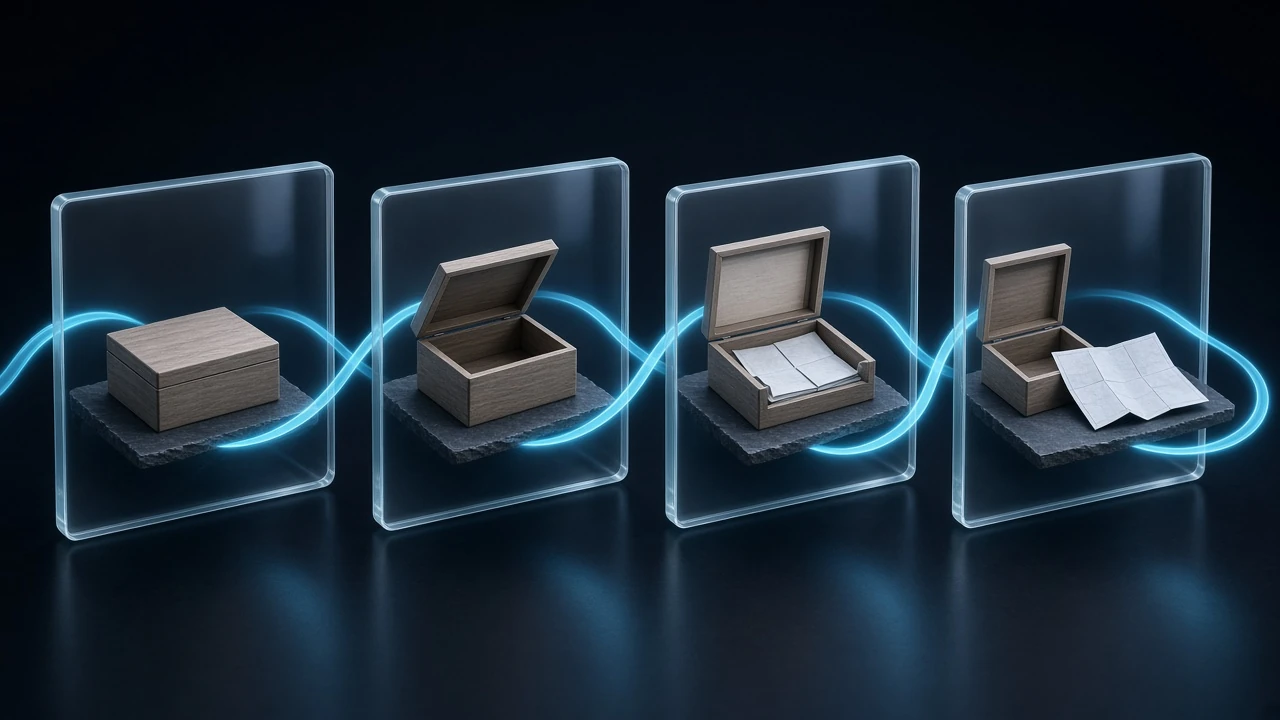
MAGI-2 480B MoE architecture describes how the flagship model organizes capacity and computation, not a guarantee that every generated scene follows physics. The key distinction is between 480 billion total parameters and approximately 28 billion active parameters. Both numbers matter, but they answer different questions.
This explainer follows Sand.ai's public disclosures and the research it cites. It is not a reverse-engineering report, a hardware benchmark or a test of a website's backend. The useful outcome is a clearer way to read architecture claims without turning them into unsupported promises about quality or speed.
What the MAGI-2 480B MoE architecture numbers mean
In its November 24, 2026 flagship announcement, Sand.ai reports 480B total parameters, roughly 28B active parameters and pre-training data scaled to 4T tokens. It separately identifies the earlier Preview as approximately 114B total and 6B active.
| Disclosed release | Total parameters | Approximately active | Interpretation boundary |
|---|---|---|---|
| MAGI-2 flagship | 480B | 28B | The full model discussed in the launch announcement |
| MAGI-2 Preview | 114B | 6B | A different research release, not a smaller numerical description of the same flagship |
Total parameters describe the model's full parameter inventory. Active parameters describe the portion involved in the selected computation under the sparse design. Do not add the numbers together or describe the active count as a second model running alongside the total.
The ratio of active to total parameters also does not directly tell you the fraction of total serving cost, memory use or elapsed time. Generation includes more than a parameter count: sequence processing, communication, output processing and service operation all matter. The public numbers alone do not establish a deployment configuration.
Why mixture-of-experts separates capacity from computation
A sparse mixture-of-experts design uses routing to select which expert computations handle an input rather than applying the entire expert collection uniformly. This lets a model expand its available capacity without activating every expert for every token.
For background, MH-MoE: Multi-Head Mixture-of-Experts discusses conditional parameter selection and evaluates a multi-head implementation on language modeling. That paper helps explain the terminology. It is not the complete implementation specification or an evaluation of MAGI-2's video outputs.
“Expert” is a technical name for a network component, not evidence that one component is a certified specialist in hands, dialogue or physical laws. Unless a source discloses such an assignment, do not invent a human-readable division of labor inside the model.
Similarly, more available parameters do not logically guarantee better results on every task. Data, training choices, evaluation conditions and the particular scene all affect what a model does. A capacity number is one part of a research description, not an all-purpose ranking.
What multi-head routing changes in the disclosed design
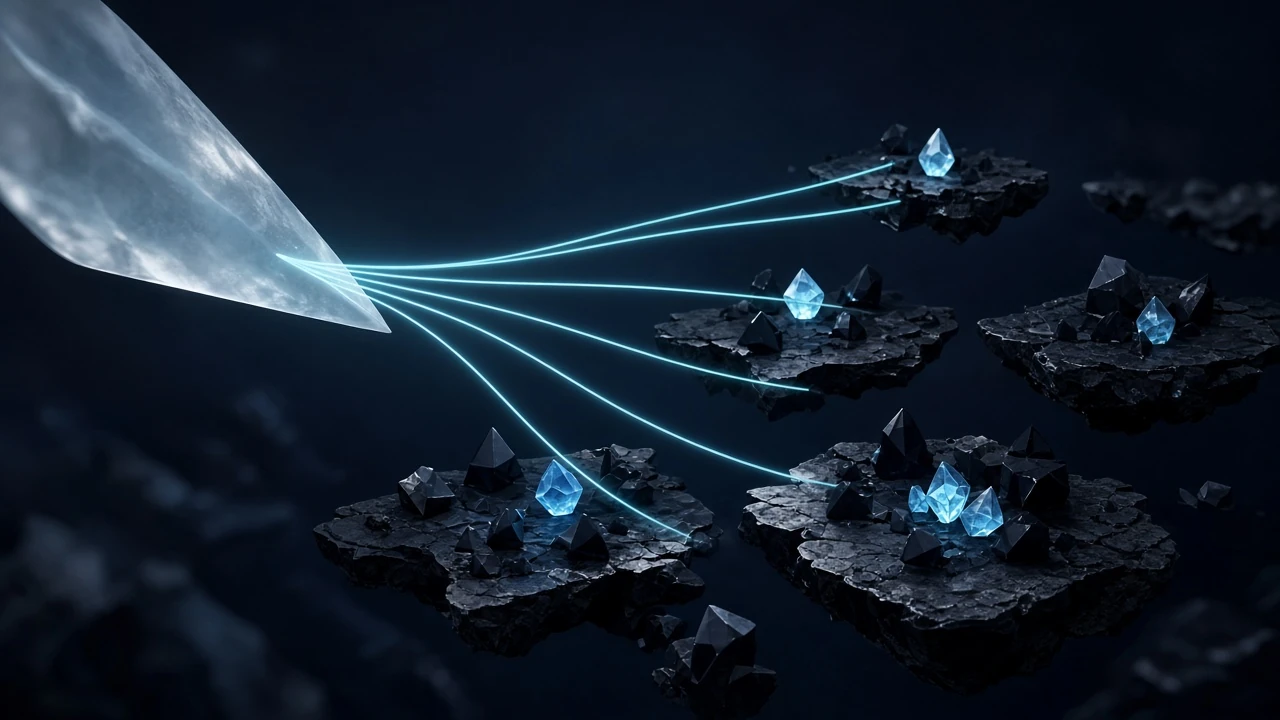
Sand.ai describes its Multi-Head Latent MoE as splitting each token into independent heads with their own routing and expert pools. Its systems explanation contrasts this with moving dynamically routed full tokens across devices.
The cited paper Multi-Head LatentMoE and Head Parallel: Communication-Efficient and Deterministic MoE Parallelism addresses communication costs and load imbalance in distributed MoE training. It proposes head-parallel communication whose cost does not grow with the number of activated experts in the same way as the expert-parallel baseline studied there.
The important distinction is between two decisions:
- Moving information between devices: the architecture aims to make exchanges more predictable through fixed head ownership and known tensor shapes.
- Selecting expert computation: data-dependent routing can remain local after the relevant head information has been exchanged.
This is a systems explanation, not a claim that a model understands causality because its communication is deterministic. “Deterministic communication” describes the exchange pattern; it does not mean every video is deterministic, physically correct or semantically faithful.
Keep experimental speedups in their original setting. A research paper's training comparison does not measure queue delay or video turnaround in a third-party service. This article does not infer how long a user job takes from a parallelism diagram.
Single-stream audio-video does not mean a single processing stage
Sand.ai describes text, video and audio tokens as being processed within one continuous sequence. That single-stream backbone is intended to support their joint evolution, including relationships among motion, speech and sound.
A related background source, Speed by Simplicity: A Single-Stream Architecture for Fast Audio-Video Generative Foundation Model, concerns daVinci-MagiHuman, a distinct model. It describes a unified sequence for text, video and audio. Its language coverage, speech error rates, inference times and hardware results cannot be assigned to MAGI-2 merely because Sand.ai cites the research.
Also distinguish a shared backbone from the complete delivery pipeline. Single-stream does not prove that there is one inference step, no post-processing or no upscaling. Using “single pass” as a shortcut can conceal precisely the pipeline stages that the developer explicitly discusses.
How data, post-training and upscaling fit together
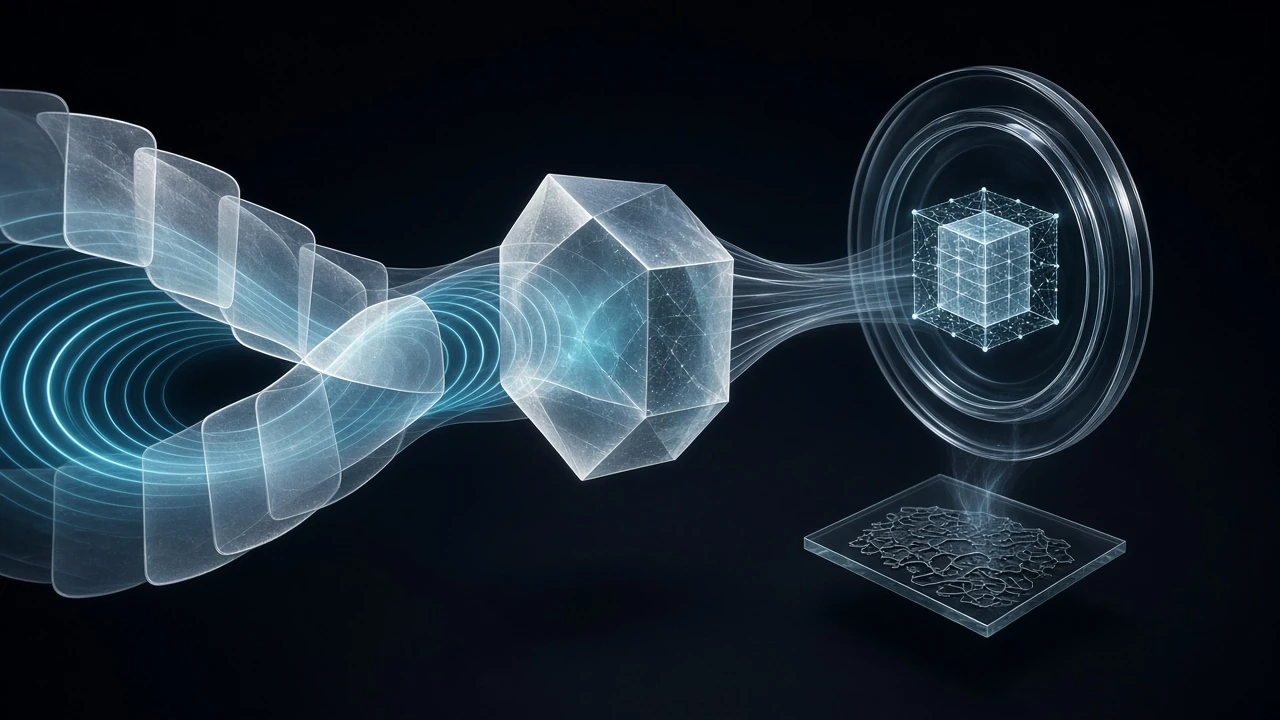
The flagship announcement reports 4T pre-training tokens. Tokens are the training representation counted by the developer, not four trillion separate videos, photographs or hours of footage. Avoid substituting a more familiar unit that the source does not support.
Sand.ai describes retaining complex real-world material rather than filtering only for uniform aesthetics. It then discusses post-training aimed at visual and acoustic richness. These are developer explanations of the training approach; this guide did not inspect the dataset or independently reproduce the training results.
For final 1080p, 25 fps delivery, Sand.ai describes a dedicated latent spatiotemporal upscaler and re-injection of original reference images into that stage. The base generation and the delivery-resolution reconstruction therefore should not be collapsed into an “upscaler-free native pixels” claim.
The practical implication is modest: evaluate the delivered details. A face, label or small moving object can still need review, even when an upscaling stage is designed to improve it. Higher output dimensions do not establish identity preservation or text accuracy in a specific clip.
Why architecture is not a physics or quality certificate
Sand.ai acknowledges remaining trajectory and continuity artifacts during extreme high-speed motion, overly smooth fine motion in some 2D animation settings and limitations in complex soundscapes. These limitations belong beside the capability claims, not in a footnote that a reader must discover elsewhere.
The announcement also distinguishes exploratory behaviors in a pre-trained checkpoint from behavior after post-training. That is not a basis for advertising a dependable puzzle-solving, translation or reasoning tool inside a third-party video studio. A reported probe and an exposed product feature are different levels of evidence.
Independent evaluation also remains task-specific. At the November 25, 2026, EST check, AA-Video-I2V v2.1 with audio listed the flagship MAGI-2 first, with Elo 1163 ±14 and a rank range of 1–3. The separate AA-Video-T2V v2.1 with audio listed it seventh, with Elo 1150 ±13 and a rank range of 4–11.
Those are preference-evaluation snapshots, not an experiment isolating parameter count, head routing or physical reasoning. They cannot show that one architectural choice caused the ranking. Refresh dynamic results before publication and never generalize the image-to-video result into an all-category first-place claim.
How to evaluate an architecture claim in practice
Use four questions when reading a model or service description:
- Which release? Check flagship versus Preview and keep the reported parameter counts attached to the right model.
- Which evidence layer? Separate developer disclosure, a related paper's experiment, independent preference evaluation and a site's own statements.
- Which pipeline stage? Training throughput, backbone generation, upscaling and user-facing queue time are not interchangeable measurements.
- Which observed outcome? A plausible mechanism does not replace inspecting the actual clip for the task that matters.
magi-2.online is an independent third-party studio, not Sand.ai's official service. Its stated NanoAPI integration is not proof that this article audited the serving model, hardware or runtime controls. Nothing here establishes GPU requirements for using or hosting the full flagship.
If you later evaluate reference-driven outputs, use materials you own or are authorized to transform and consult the site's terms of service. Record the model and platform with your prompt and review notes. No prompts or output examples in this article were generated or tested.
FAQ
Does 480B mean all parameters are active for each token?
No. Sand.ai separately reports approximately 28B active parameters for the sparse flagship. The total and active counts describe different aspects of the design.
Can I use Preview hardware requirements for the flagship?
Not as evidence. The approximately 114B Preview and the 480B flagship are different releases, and the material reviewed here does not establish a complete flagship deployment specification.
Does head-parallel communication guarantee faster website jobs?
No. Research training results and communication properties do not measure a particular service's queue or end-to-end generation time.
Are full flagship weights proven public by these sources?
No. The announcement describes a later open-source release and detailed technical report as follow-up work. The inspected material does not establish a released full flagship package; that is a bounded evidence statement, not proof that no later resource exists anywhere.
What is the most important limit on interpreting the architecture?
Do not turn a capacity or systems explanation into a guarantee of physics, perfect lip-sync or universal quality. Use the disclosed design to understand the model, then evaluate the actual result separately.
Sources & References
- Artificial Analysis — Video Arena Image-to-Video Leaderboard
- Artificial Analysis — Video Arena Text-to-Video Leaderboard
- arXiv:2411.16205 — MH-MoE: Multi-Head Mixture-of-Experts
- arXiv:2602.04870 — Multi-Head LatentMoE and Head Parallel
- arXiv:2603.21986 — Speed by Simplicity: Single-Stream Audio-Video Foundation Model
- Sand.ai — Official MAGI-2 Flagship Announcement
- MAGI-2 Online Studio — Independent Web Workspace
- MAGI-2 Official YouTube Channel (@magi2online)