
MAGI-2 vs Seedance 2.0, Kling 3.0 and Veo 3.1 is a useful comparison only when the versions and access routes stay fixed. A developer announcement, an API contract and a browser studio are not interchangeable evidence. Start with the requirements of your shot, then compare what each named interface actually documents.
This is a documentation-based comparison checked on November 25, 2026, EST—not a generated-video shootout. No clips, turnaround times, account balances or commercial outcomes were tested. The tables distinguish supported options from claims about how well those options work.
What this MAGI-2 vs Seedance 2.0, Kling 3.0 and Veo 3.1 comparison covers
The comparison covers four bounded offerings:
| Name used here | Evidence and access scope | What is excluded |
|---|---|---|
| MAGI-2 flagship | Sand.ai's full model announcement and Sand Ark contract | The smaller MAGI-2 Preview, MAGI-1 and untested website implementation details |
| Seedance 2.0 | ByteDance Seed's April 15, 2026 research publication and February launch explanation | Seedance 2.5 and the separate Fast variant |
| Kling 3.0 documented API | The official 3.0 Omni image-to-video document for /image-to-video/kling-3.0 | Other Kling releases and assumptions about every consumer interface |
| Veo 3.1 GA Cloud | Google Cloud's veo-3.1-generate-001 reference | Fast, Lite and the retired Gemini API Preview endpoints |
Sand.ai describes its flagship as having 480 billion total parameters and approximately 28 billion active parameters. The same flagship announcement distinguishes it from the roughly 114-billion-total, 6-billion-active Preview. Parameter count identifies the research release; it is not an independent quality score.
For access context, magi-2.online is an independent third-party studio, not Sand.ai's official service. The site states that it uses NanoAPI, but this comparison does not audit that routing or infer logged-in controls from model documentation.
Documented duration and output differences
| Model and source | Documented duration | Output details within that source's scope |
|---|---|---|
| MAGI-2 through Sand Ark | Whole seconds from 4 to 30 | 1080p; six ratios: 21:9, 16:9, 4:3, 1:1, 3:4 and 9:16 |
| Seedance 2.0 in the April research publication | 4–15 seconds | Native 480p and 720p in that dated publication |
| Kling 3.0 in the documented image-to-video API | Integer options from 3 to 15 seconds | Listed resolution settings include 720p, 1080p and 4k; this is an options list, not evidence of a particular rendering pipeline |
| Veo 3.1 in the Cloud GA Generate reference | 4, 6 or 8 seconds; asset-reference generation is limited to 8 seconds | 9:16 or 16:9, 24 fps; the main Generate table lists 720p, 1080p and 4K output options |
A longer maximum can matter when your action needs more uninterrupted time. It does not establish that every result is one continuous take, that every action fits naturally, or that the maximum is available in every third-party interface.
Resolution also needs careful language. Sand.ai reports 1080p, 25 fps delivery while explicitly describing a latent spatiotemporal upscaler. Calling MAGI-2's audio-video generation native does not justify claiming that its base render bypasses upscaling. Likewise, the Seedance row describes its dated research publication, not every present-day platform carrying a Seedance label.
Audio and references are not one yes-or-no feature
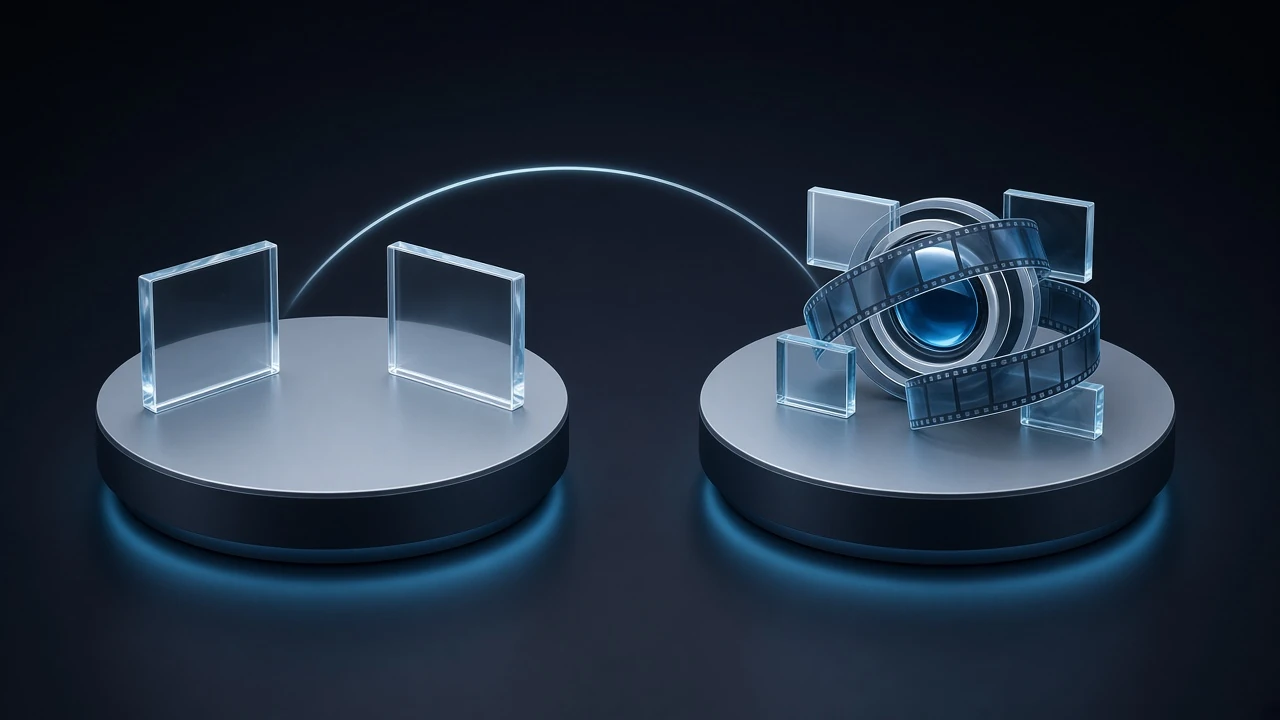
MAGI-2's announcement documents joint dialogue, foley, ambience and music, with reference conditioning across images, videos and audio. Its reference ceiling is 10 images, five videos and five audio clips. Frame conditioning is a different mode: the Ark contract separates first/last-frame requests from general references.
ByteDance's Seedance 2.0 technical launch describes joint audio-video generation and mixed inputs of up to nine images, three videos and three audio clips. It also discusses editing and extension. Those developer-described capabilities should not be relabeled as evidence that every reseller exposes equivalent editing tools. The launch acknowledges remaining issues with multi-subject consistency, text rendering and complex editing effects.
The Kling 3.0 endpoint document lists first frames, last frames and elements in its input contract. Its settings.audio accepts native or off, with off as the documented default. It also lists a multi_shot setting, defaulting to true. That differs from assuming that all video generators produce sound by default or that a requested duration means a single shot.
For the main Veo 3.1 Cloud GA model, Google lists sound generation, first/last-frame generation, asset reference images and extension support. The modality table does not list audio input as supported. Therefore, “supports sound” should not be read as “accepts the same audio-reference workflow as MAGI-2.” Check the particular mode rather than counting generic feature checkmarks.
Why Veo's platform name matters
The current Gemini API video lifecycle page says that Veo 3.1 Preview in the Gemini API shut down on October 22, 2026. That warning names the Preview endpoints and directs users toward other offerings, including GA models through Google's Cloud platform.
The separately documented Cloud model veo-3.1-generate-001 is marked GA. A retired Preview endpoint is not evidence that all Veo 3.1 access has stopped. Conversely, an old tutorial that still names a Preview identifier is not a reliable setup guide for the Cloud GA model.
For a real project, record the exact model identifier and access platform in the production brief. A family name alone is too broad to explain which limits, availability conditions and lifecycle policy apply.
How to read the Artificial Analysis rankings
Independent preference rankings add context, but they answer a narrower question than “Which model is best for my project?” Keep the task, audio condition, benchmark version and date attached to every number.
At the November 25, 2026, EST check, AA-Video-I2V v2.1 with audio listed MAGI-2 first, with Elo 1163 ±14, a displayed 95% interval of 1149–1177, 5,943 samples and a rank range of 1–3. This concerns animating an input image into video with audio. It is not an all-video championship or a measurement of advertising conversion.
On the separately scoped AA-Video-T2V v2.1 with audio, MAGI-2 was seventh, with Elo 1150 ±13, 5,441 samples and a rank range of 4–11 at the same check. That board evaluates generation from a text prompt rather than animation of an input image.
Do not average those ranks into a new claim, transfer an image-to-video score to text-to-video, or treat overlapping confidence intervals as proof of decisive superiority. The leaderboards also distinguish MAGI-2 from Preview. Their tested model labels and settings are not automatically identical to a particular third-party studio session. Refresh dynamic rankings before relying on them in a purchase or production decision.
How to choose by workflow rather than a universal winner
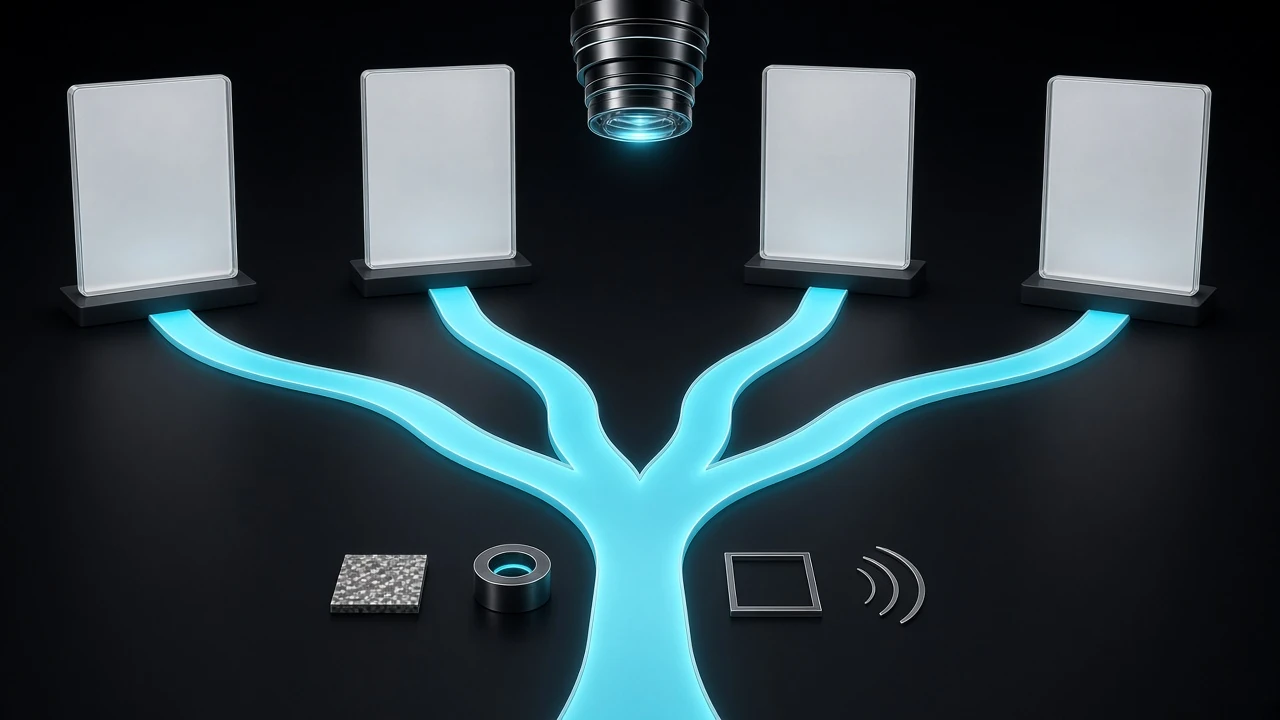
Use a short requirements sheet before choosing a platform:
- Name the input mode. Is the job text-only, endpoint-driven or dependent on video and audio references?
- Set the necessary output length. Separate the length of one generation from the length of the finished edit.
- Identify delivery constraints. Ratio, frame rate and output format can eliminate an otherwise interesting option.
- Check reference compatibility. Count and duration limits matter more than a generic multimodal label.
- Define acceptance criteria. Decide which failures—wrong words, changed packaging, inconsistent identity or implausible contact—require rejection.
- Verify access. Confirm the exact platform exposes the needed mode without assuming a developer feature exists in its UI.
For a fair future evaluation, use materials you own or are authorized to upload, keep the shot objective stable and record version-specific differences in the setup. Do not claim a controlled head-to-head if one run uses endpoint images and another relies only on text. Review visual continuity and sound independently, and retain failed attempts rather than selecting only flattering examples.
The site's terms of service are relevant to materials submitted through magi-2.online. Rights in images, recordings, likenesses and brands still need attention regardless of the model chosen. Nothing in a capability table establishes commercial clearance or platform acceptance.
FAQ
Is MAGI-2 the overall number-one video model?
That claim is not supported by the evidence here. Its first-place result is scoped to the dated AA image-to-video-with-audio task and benchmark version discussed above; the text-to-video result is different.
Does this comparison cover Seedance 2.5 or newer Kling releases?
No. It deliberately fixes Seedance 2.0 and the documented Kling 3.0 endpoint. Substituting another release would require a different evidence table.
Is Veo 3.1 unavailable because Preview shut down?
The retired Gemini API Preview and the documented Cloud GA model are separate offerings. Use the appropriate current Cloud documentation for veo-3.1-generate-001 rather than obsolete Preview instructions.
Which model guarantees correct physics or perfect lip-sync?
No such guarantee is established here. Developer capabilities and preference rankings do not replace shot-level review.
What should I compare first?
Start with the required input mode and delivery format. If two offerings meet those constraints, compare actual authorized results under a recorded evaluation plan—not an unqualified winner label.
Sources & References
- Google AI for Developers — Veo Video Generation Documentation
- Artificial Analysis — Video Arena Image-to-Video Leaderboard
- Artificial Analysis — Video Arena Text-to-Video Leaderboard
- Google Cloud — Veo 3.1 Generate Model Documentation
- Kling AI — Kling 3.0 Omni Image-to-Video API Specification
- Sand.ai Platform — Video Generations Documentation
- Sand.ai — Official MAGI-2 Flagship Announcement
- ByteDance Seed — Official Launch of Seedance 2.0
- ByteDance Seed — Seedance 2.0 Technical Report
- MAGI-2 Online Studio — Independent Web Workspace
- MAGI-2 Official YouTube Channel (@magi2online)